Bipedal robotics · Mechanical design · 2026
Bipedal robot design and gait demonstration
A bipedal robot prototype combining CAD design, a Raspberry Pi and bus-servo hardware system, and a PyBullet hillclimber gait experiment.
- My role
- PyBullet gait-learning experiment and foot-design iteration
- Project context
- Physical gait demonstration and foot-design iteration
- Methods & tools
- Mechanical design · PyBullet · Hillclimber · Bus servos
Overview
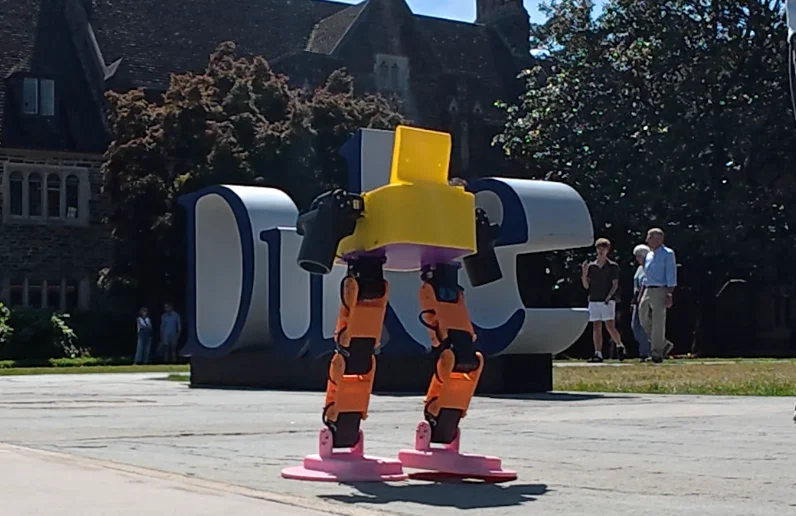
This project brings together design renders, a hardware architecture diagram, a physical gait clip, and a simulation recording of a bipedal robot. The outdoor photograph at Duke shows the physical robot; the lead video shows a gait demonstration on a workbench. I used PyBullet and a hillclimber algorithm for gait learning, then iterated on the feet when the learning did not work as intended.
Mechanical design
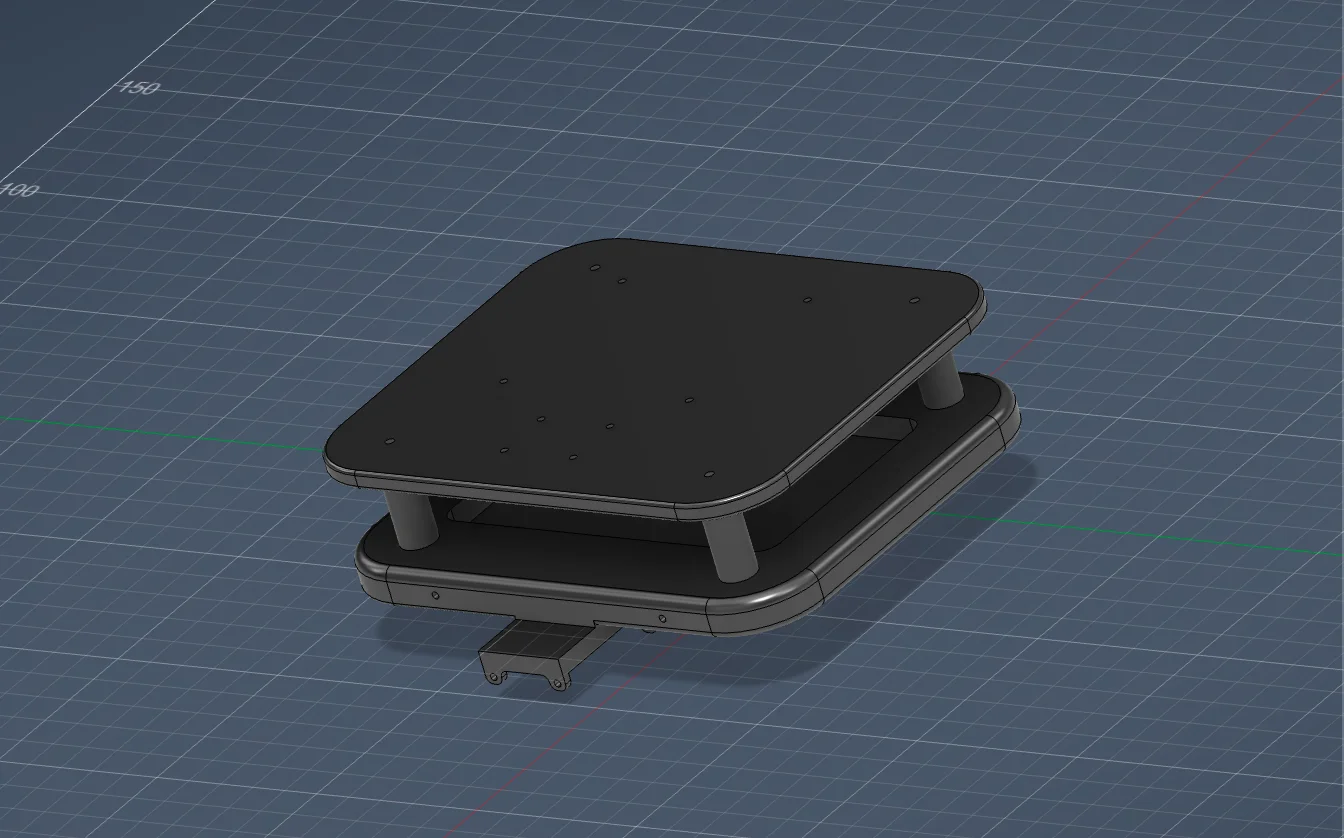
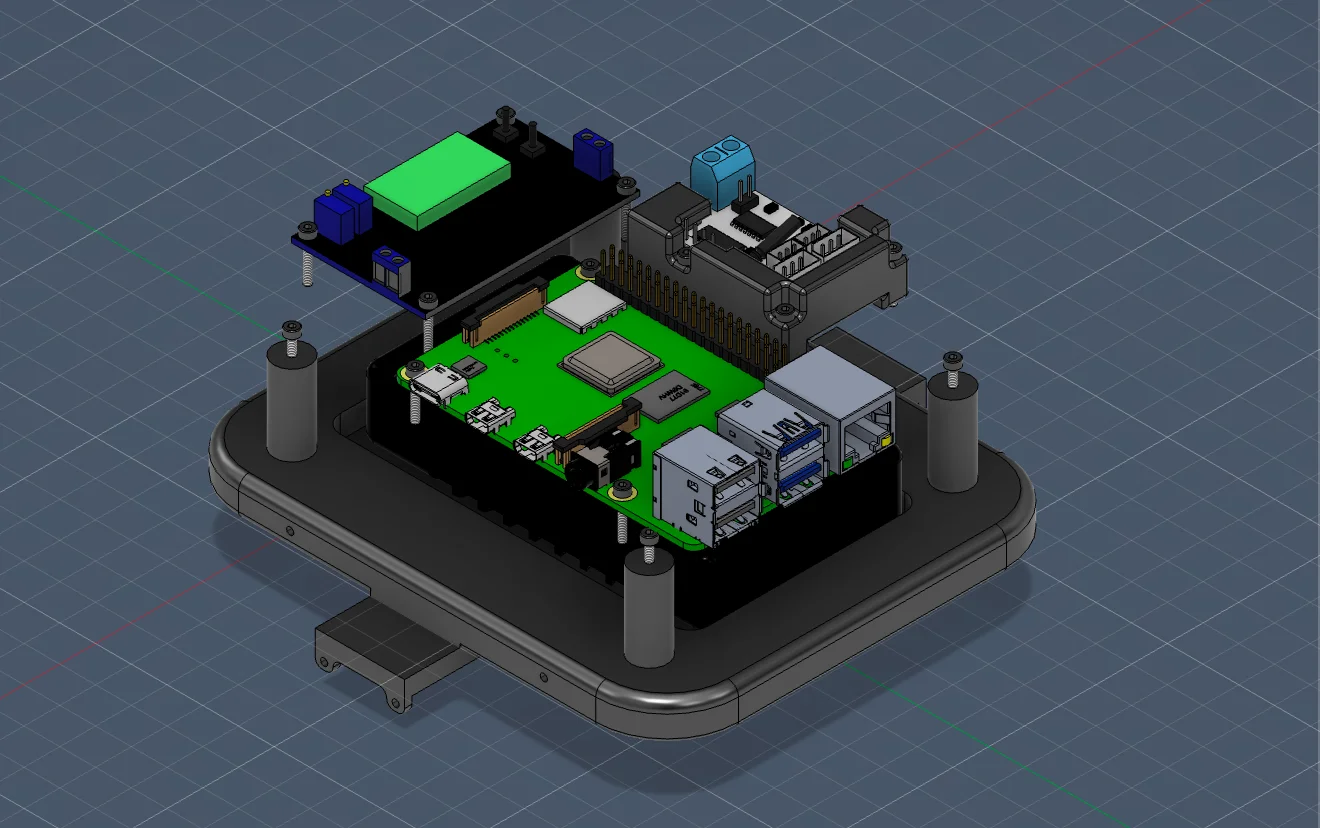
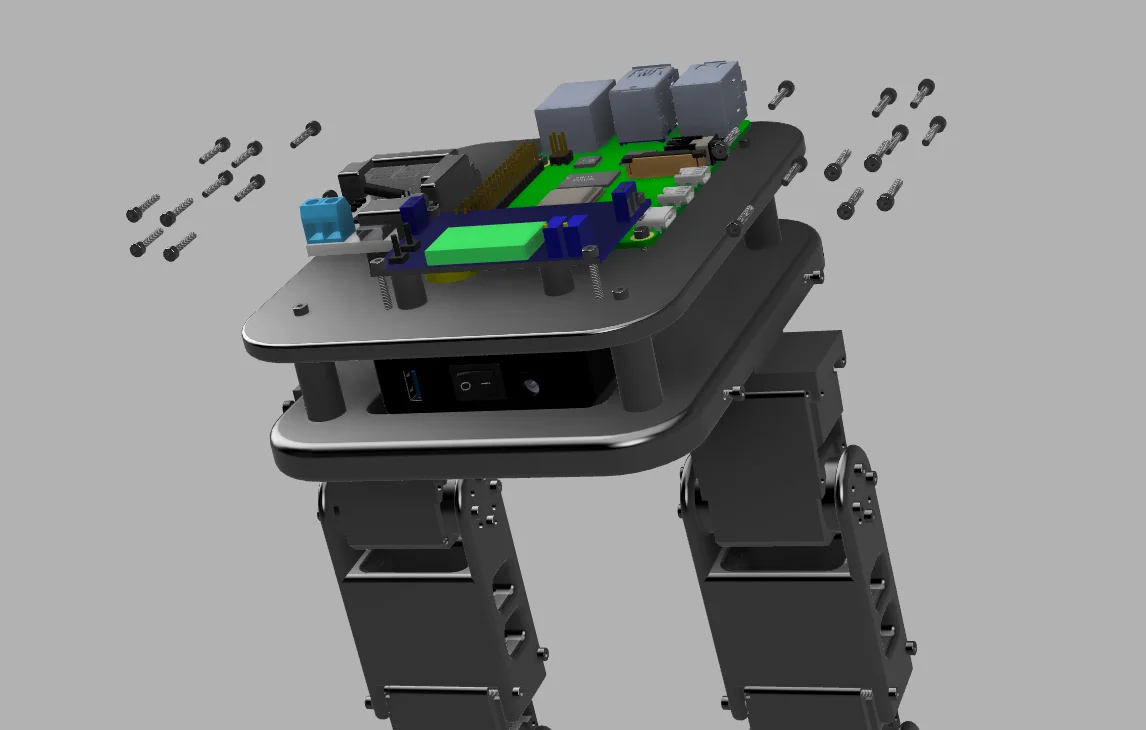
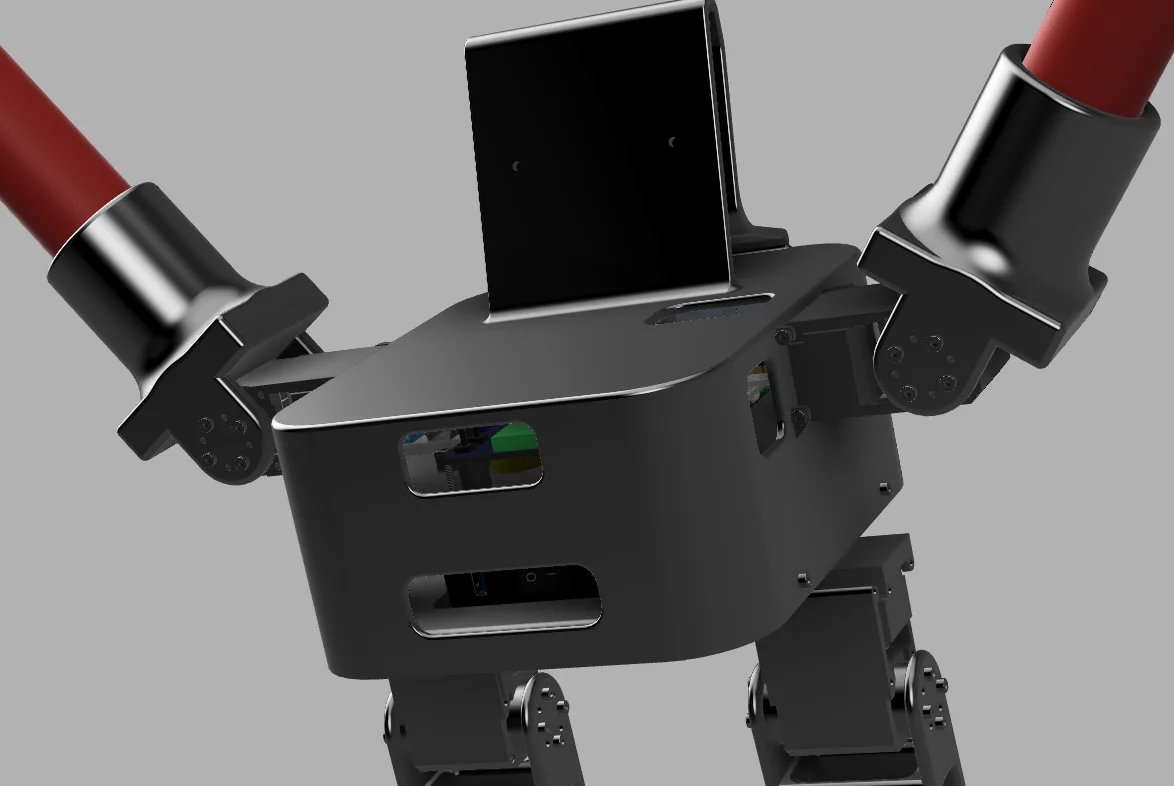
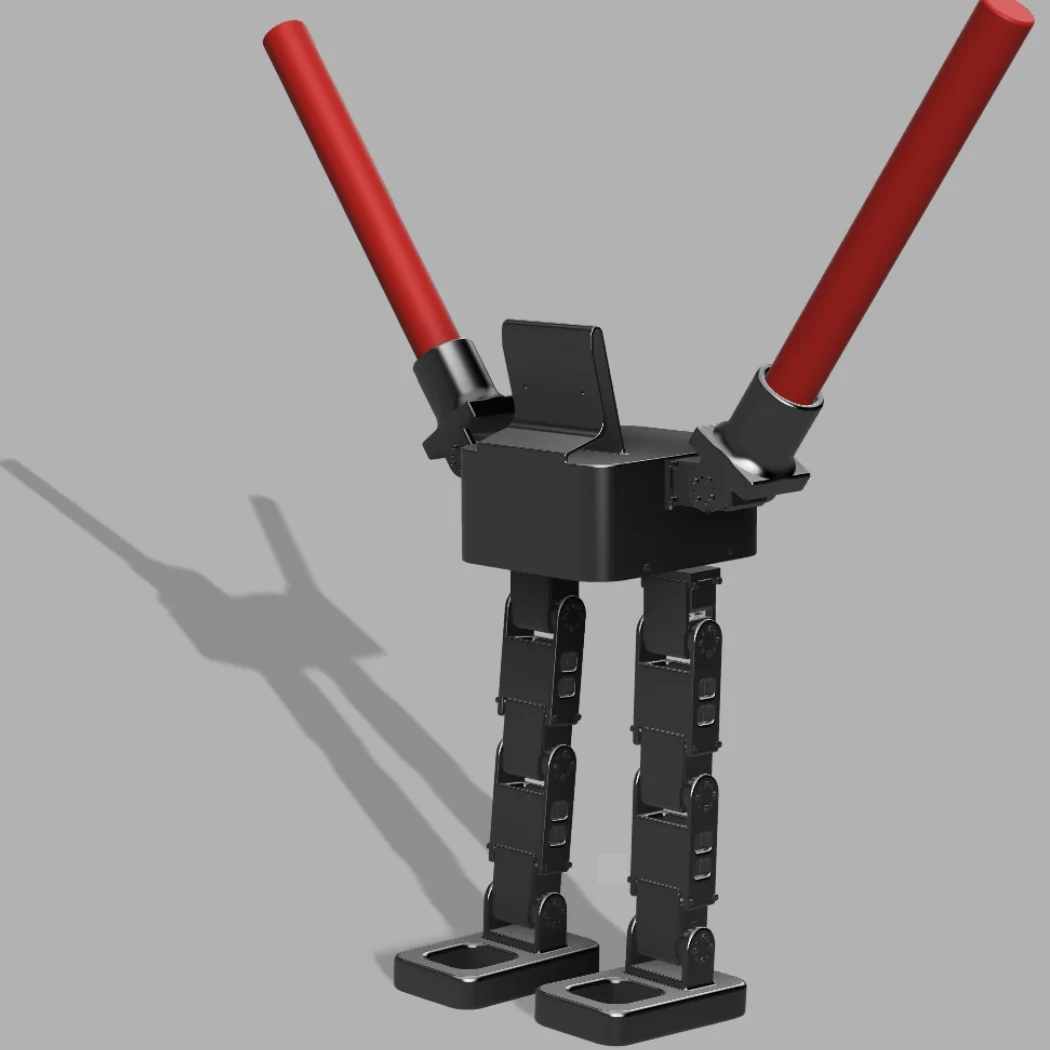
The CAD images show the base enclosure, an electronics layout, upper assembly views, and a full-robot render across different design stages.
Hardware architecture
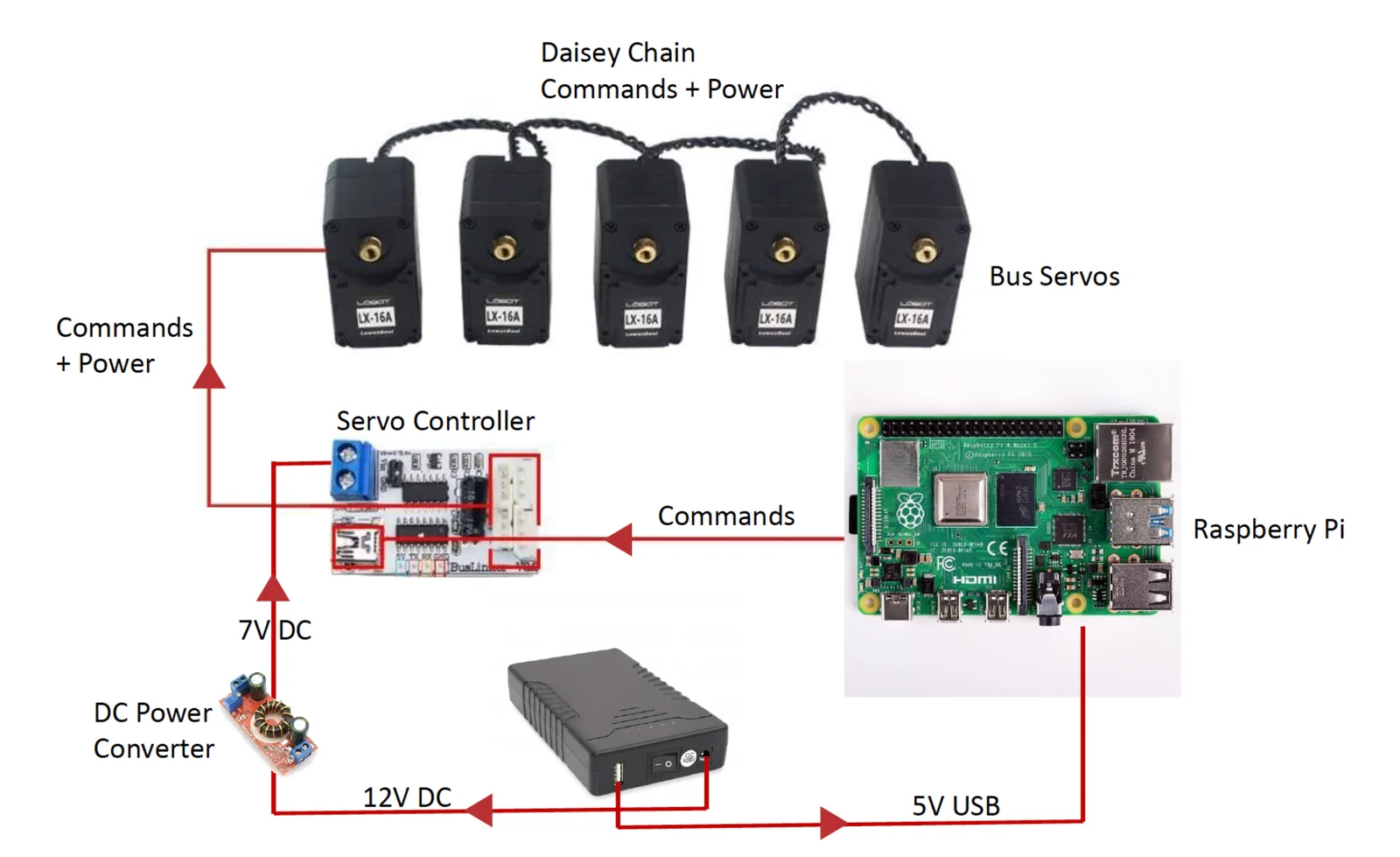
The hardware diagram shows a Raspberry Pi sending commands to a servo controller. A 12 V DC source feeds a converter that supplies 7 V DC to the servo controller; the Pi receives 5 V over USB. The controller distributes commands and power through a daisy chain of bus servos. The pictured servos are labeled LX-16A.
Gait and simulation
I used PyBullet and a hillclimber algorithm to search for a gait. The learning attempt did not produce the desired behavior. I then added extra padding to the outer areas of the feet as a physical design adjustment.
The physical video shows the robot stepping on a workbench. A separate screen recording shows a simplified biped model moving in simulation.
Individual contributions
I ran the PyBullet hillclimber gait-learning experiment and added padding to the outer areas of the feet during physical iteration.
Technical diagrams
Design & CAD
Project gallery